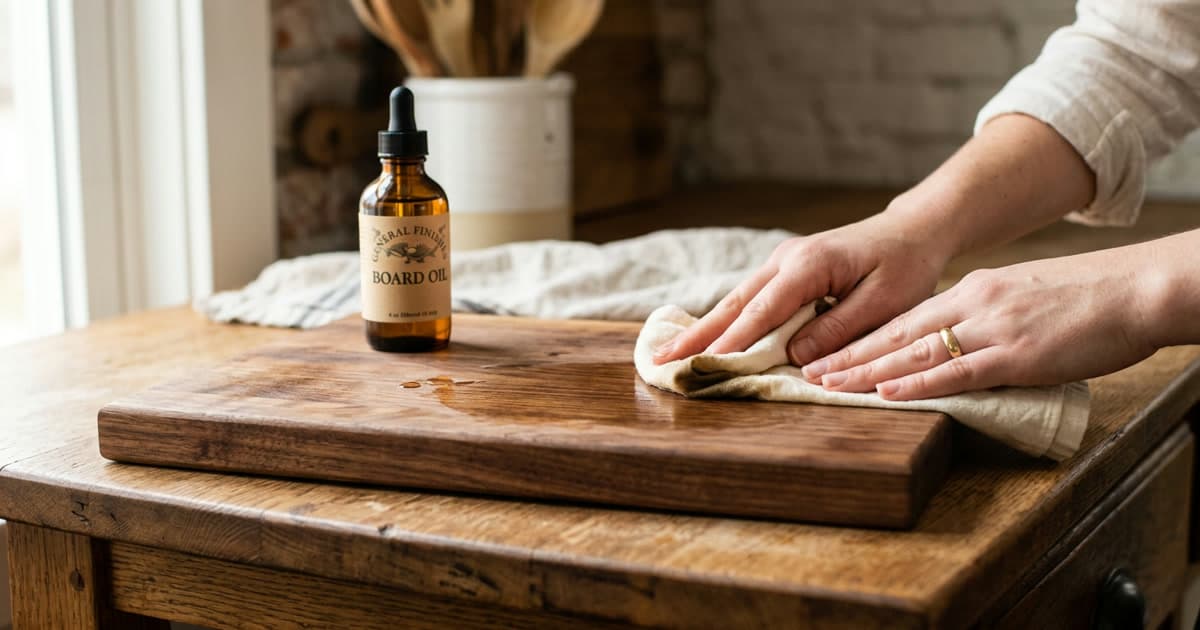
A quality hardwood cutting board is one of the best investments you can make for your kitchen. It is also one of the simplest to maintain. Despite what you may have heard, caring for a wooden cutting board does not require special skills or expensive supplies. A few basic habits will keep your board looking beautiful and performing perfectly for decades.
At Schmidt Woodcraft, we build every board by hand in our Jacksonville, FL workshop, and we want each one to last a lifetime. Here is everything you need to know about keeping your wooden cutting board in top condition.
Daily Cleaning: Keep It Simple
The most important thing you can do for your cutting board is clean it properly after every use. The good news is that this takes about thirty seconds.
Wash your board with warm water and a small amount of mild dish soap. Use a soft cloth or sponge to wipe down the entire surface, paying attention to any areas where food residue may have collected. Rinse thoroughly with warm water and dry the board immediately with a clean towel.
That is genuinely all it takes for everyday cleaning. You do not need specialized wood cleaners, antibacterial sprays, or anything harsh. The wood itself has natural antibacterial properties, especially dense hardwoods like maple and walnut. A simple wash with soap and water is more than enough to keep your board safe and sanitary.
The One Rule That Matters Most: Never Soak
If there is a single rule to remember about wooden cutting board care, it is this: never submerge your board in water, and never put it in the dishwasher. Both will cause serious damage that is difficult or impossible to reverse.
When wood sits in standing water, it absorbs moisture unevenly. The side touching the water swells while the dry side stays the same size. This creates internal stress that leads to warping, cracking, and splitting at the glue joints. A five-minute soak can undo years of good care.
The dishwasher is even worse. The combination of prolonged heat, steam, and aggressive detergent strips the oils from the wood, dries out the fibers, and causes rapid expansion and contraction. We have seen beautiful boards come back to us completely destroyed after a single trip through the dishwasher. It is the fastest way to ruin a cutting board.
Drying Your Board Properly
How you dry your board matters almost as much as how you wash it. After rinsing, towel-dry the board immediately. Do not leave it sitting in a puddle of water on the counter, and do not lean it against the backsplash while still dripping wet.
The best practice is to stand the board on its edge to air dry after towel-drying. This allows air to circulate around both faces evenly, which prevents the kind of uneven moisture absorption that causes warping. If your board has rubber feet, you can lay it flat on a drying rack as long as air can reach the bottom surface.
Avoid drying your board near a heat source like a stove, oven, or sunny window. Rapid drying is almost as harmful as soaking because it causes the outer layers of wood to shrink faster than the interior, which leads to surface cracks.
Oiling: The Key to Long-Term Health
Regular oiling is what keeps a wooden cutting board looking rich, feeling smooth, and resisting moisture over the long haul. Think of it like moisturizing your skin. The oil soaks into the wood fibers and creates a protective barrier that repels water, prevents stains, and keeps the surface from drying out and cracking.
We recommend food-grade mineral oil for routine maintenance. It is odorless, tasteless, safe for food contact, and it will not go rancid the way cooking oils can. You can find it at most grocery stores or pharmacies, often labeled as "cutting board oil" at kitchen supply stores. For a deeper dive into which oils work best and which to avoid, check out our guide on the best oils for wooden kitchen items.
To apply, pour a generous amount of mineral oil onto the board and spread it across the entire surface using a clean cloth or paper towel. Cover the top, bottom, sides, and edges. Let the oil soak in for at least a few hours, or ideally overnight. In the morning, wipe off any excess with a dry cloth. The board should feel smooth and nourished, not sticky or greasy.
How Often to Oil Your Board
A new cutting board should be oiled before its first use. Apply two or three coats over a couple of days, letting each coat absorb fully before adding the next. This initial seasoning saturates the wood fibers and gives the board a strong protective foundation.
After that initial seasoning, the frequency depends on how often you use the board and the conditions in your kitchen. Here is a general guide:
- Heavy daily use. Oil once every two to three weeks.
- Regular use (a few times per week). Oil once a month.
- Light or occasional use. Oil every six to eight weeks.
There is a simple test to tell when your board needs oil. Sprinkle a few drops of water on the surface. If the water beads up and sits on top, the board is well-oiled. If the water soaks in quickly, it is time for a fresh coat.
Keep in mind that humidity plays a role, too. Here in Jacksonville, FL, our humid summers are actually gentler on wood than you might expect because moisture in the air helps prevent over-drying. But during the cooler, drier months, you may need to oil more frequently. For more on how seasons affect your board, read our post on seasonal wood care and humidity.
Board Cream and Wax: The Extra Step
Once your board is well-oiled, applying a board cream or wax finish adds another layer of protection. Board cream is typically a blend of mineral oil and beeswax, sometimes with a touch of carnauba wax for extra hardness. It sits on the surface and creates a more durable barrier than oil alone.
Apply board cream after oiling, once the oil has fully absorbed. Rub it into the surface with a clean cloth using circular motions, let it sit for a few hours, then buff off the excess with a dry cloth. The board will have a subtle sheen and a silky feel that is genuinely satisfying.
Board cream does not replace oil. Think of oil as the deep conditioner and wax as the topcoat. Together, they give your board the best possible protection against moisture, stains, and everyday wear.
Things to Avoid
Most cutting board damage comes from a few common mistakes. Avoid these and your board will stay in great shape for years:
- Never use bleach or harsh chemicals. They strip the wood's natural oils and can damage the grain structure. If you need to disinfect, a paste of coarse salt and lemon juice works safely and effectively.
- Never use cooking oils like olive oil or vegetable oil. They will go rancid inside the wood and create a persistent unpleasant smell. Always use food-grade mineral oil or a dedicated cutting board oil.
- Never microwave your cutting board. This sounds obvious, but we have been asked. The rapid heat will crack the wood.
- Never store your board flat in a damp environment. Store it on its edge in a dry, ventilated area.
- Never cut extremely hot foods directly on the board. Let food cool slightly before transferring it to the cutting surface. Extreme heat can scorch the wood and dry out the finish.
Deep Cleaning When You Need It
Even with good daily cleaning, there are times when your board needs a little extra attention. Maybe you cut something strongly flavored like garlic or onions. Maybe there is a stain from beets or berries. For these situations, natural cleaning methods work beautifully without harming the wood.
Sprinkle a generous layer of coarse salt over the board and use half a lemon as a scrubber, squeezing gently as you work the salt across the surface. The salt provides gentle abrasion while the lemon juice cuts through odors and light stains. Rinse with warm water, dry thoroughly, and re-oil if the surface looks dry afterward.
For more stubborn stains and odors, we have a full guide to removing stains and odors from wood naturally that covers everything from baking soda paste to hydrogen peroxide treatments.
When to Refinish or Replace
With proper care, a quality hardwood cutting board can last twenty years or more. Over time, the surface will develop a patina of fine knife marks that many cooks come to appreciate as part of the board's character. This is completely normal and does not affect the board's hygiene or performance.
If the knife marks become deep grooves, or if the surface feels rough and splintery despite regular oiling, a light sanding can restore the board to like-new condition. Sand with progressively finer grits, from 120 up to 220, then re-oil generously. This is something you might do once every few years at most.
A board that has deep cracks, significant warping, or persistent odors that will not come out may need professional restoration or replacement. We are always happy to take a look and give you an honest assessment.
Your Board Will Thank You
Caring for a wooden cutting board is one of those rare situations where a tiny investment of time pays off enormously. Thirty seconds of cleaning after each use. A few minutes of oiling once a month. That is all it takes to keep a handmade board performing and looking its best for a lifetime.
For a complete reference you can bookmark, visit our wood care guide. And if you are ready to invest in a board that is worth taking care of, explore our collection of handcrafted cutting boards and kitchen pieces, or request a custom piece built to your exact specifications.
Looking for the perfect cutting board?
Every board we make is built by hand in our Jacksonville, FL workshop using premium hardwoods. Browse our collection or request a custom piece.