You love your wooden cutting board. You use it every day. And then one evening you slice a pile of beets, chop a mountain of garlic, or cut into a container of fresh turmeric, and suddenly your beautiful board has a stain or an odor that regular soap and water will not touch. Before you panic, know that this is completely normal and almost always fixable with ingredients you already have in your kitchen.
At Schmidt Woodcraft, we get questions about stains and odors more often than almost any other care topic. The methods we recommend are simple, natural, and food-safe. No harsh chemicals required. Here is how to handle every common stain and smell your board might encounter.
The Lemon and Salt Scrub
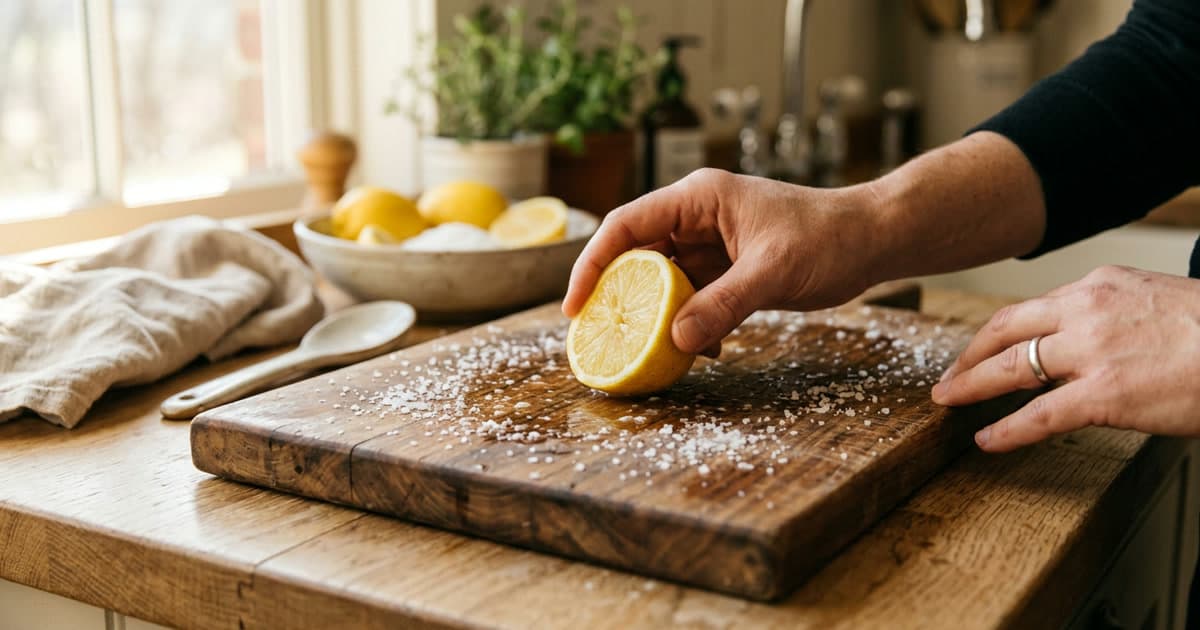
This is the go-to method for most stains and odors, and it works remarkably well. It is also the technique we recommend first because it is gentle enough for regular use and effective enough for most situations.
Sprinkle a generous layer of coarse salt (kosher salt or sea salt) across the stained area of your board. Cut a lemon in half and use the cut side as your scrubber. Press the lemon firmly into the salt and scrub in circular motions across the stain, squeezing gently to release juice as you go. The salt provides mild abrasion that lifts surface discoloration, while the citric acid in the lemon juice breaks down organic compounds that cause stains and odors.
Let the lemon juice and salt sit on the board for five to ten minutes after scrubbing. Then rinse with warm water, dry thoroughly with a clean towel, and stand the board on its edge to air dry completely. If the stain is lighter but still visible, repeat the process one more time. Most everyday stains from vegetables, fruits, and herbs will come out completely with this method.
Baking Soda Paste for Stubborn Stains
When lemon and salt are not quite enough, baking soda is the next step up. It is mildly alkaline, which gives it different cleaning chemistry than the acidic lemon juice. Between the two, most organic stains do not stand a chance.
Make a thick paste by mixing three parts baking soda with one part water. Spread the paste generously over the stained area and let it sit for fifteen to twenty minutes. The baking soda draws moisture and discoloration out of the wood fibers as it sits. After the waiting period, scrub the paste gently with a damp cloth or soft brush, then rinse with warm water and dry thoroughly.
Baking soda is also excellent for odors. If your board smells like garlic, onions, or fish after cleaning, a baking soda paste left on overnight can absorb the odor from the wood. Rinse it off in the morning and the smell should be gone or dramatically reduced.
Hydrogen Peroxide for Tough Discoloration
For stains that resist both lemon and baking soda, food-grade hydrogen peroxide (the standard 3% solution from the pharmacy) is a safe and effective option. This works particularly well on dark stains from beets, berries, wine, and tomato-based sauces.
Pour a small amount of hydrogen peroxide directly onto the stain and let it sit for ten to fifteen minutes. You may see it bubble gently, which means it is working. The peroxide breaks down the color molecules in the stain through oxidation, effectively bleaching the discoloration without damaging the wood.
After soaking, wipe the area clean with a damp cloth and dry the board thoroughly. Keep in mind that hydrogen peroxide can lighten the wood slightly in the treated area, so use it only on the stain itself rather than flooding the entire board. After treatment, apply a fresh coat of food-grade mineral oil to restore moisture and even out the appearance. Our wood care guide covers the full oiling process.
White Vinegar for Odor Elimination
White vinegar is a powerful natural deodorizer that works well on persistent smells. Its acetic acid kills odor-causing bacteria and neutralizes the organic compounds that create lingering scents in wood grain.
Mix equal parts white vinegar and water in a spray bottle. Spray the solution across the entire surface of the board and let it sit for five minutes. Wipe clean with a damp cloth, rinse with plain water, and dry thoroughly. The vinegar smell itself will dissipate within an hour as the board dries, taking the original odor with it.
For especially persistent odors like raw fish or strong onion, you can use undiluted white vinegar. Apply it, let it sit for ten minutes, then rinse well. Follow up with a light coat of mineral oil, since vinegar can be slightly drying to the wood.
Tackling Specific Common Stains
Different ingredients leave different types of stains, and knowing what you are dealing with helps you choose the right approach:
- Beet stains. These are among the most dramatic looking but respond well to hydrogen peroxide. Apply, wait fifteen minutes, wipe, and repeat if needed.
- Turmeric stains. The curcumin in turmeric binds strongly to wood fibers. Start with lemon and salt, then follow with a baking soda paste. Full removal may take two or three treatments over consecutive days.
- Berry and wine stains. Lemon and salt usually handle fresh berry stains. For set-in stains, hydrogen peroxide works best.
- Grease and oil spots. Sprinkle baking soda on the greasy area and let it sit for several hours. The baking soda absorbs the oil. Brush it off and wipe with a damp cloth.
- Garlic and onion odors. The lemon and salt scrub works immediately for mild odors. For strong garlic smell that lingers, the baking soda overnight method is your best option.
- Raw meat or fish odors. White vinegar solution is most effective here because it targets the bacteria that cause the smell. Follow with baking soda if any trace remains.
Prevention: Keeping Stains from Setting
The easiest stain to remove is the one that never sets in. A few simple habits will dramatically reduce how often you need to deal with stubborn discoloration:
Clean your board as soon as possible after use. The longer a stain sits, the deeper it penetrates into the wood fibers. A quick wash within a few minutes of cutting beets or berries prevents most staining entirely.
Keep your board well-oiled. A properly oiled board has a moisture barrier that makes it harder for pigmented liquids to soak in. When the wood is dry and thirsty, stains absorb faster and deeper. Regular oiling with food-grade mineral oil is the best preventive measure you can take. For details on oiling frequency and technique, check out our post on the best oils for wooden kitchen items.
Use separate sides of the board for different tasks if you prefer. Some cooks designate one face for fruits and vegetables and the other for meats, which keeps strong-smelling proteins from affecting the surface they use for everything else.
What Not to Use
In the quest to remove a stubborn stain, it can be tempting to reach for stronger chemicals. Resist that temptation. Here is what to keep away from your wooden kitchen items:
- Bleach. It is too harsh for wood. Bleach strips the natural oils, damages the grain, and can leave behind residues that are not food-safe.
- Abrasive cleaners or scouring pads. These scratch the surface, creating grooves where bacteria and future stains can take hold.
- Ammonia-based cleaners. They damage wood fibers and leave chemical residues.
- Dishwasher detergent. Even used by hand, dishwasher detergent is far too aggressive for wood. It strips oils and dries out the surface rapidly.
Stick with the natural methods listed above. They are effective, food-safe, and gentle enough to use regularly without degrading your board.
After the Stain Is Gone
Any deep cleaning treatment, whether it involves salt, baking soda, vinegar, or peroxide, removes some of the protective oil from the wood surface. After treating a stain, always follow up with a fresh application of food-grade mineral oil. This restores the moisture barrier and helps even out any color variation from the treatment.
If the treated area looks noticeably lighter than the rest of the board, do not worry. Apply oil generously and give it time. As the board gets used and re-oiled over the next few weeks, the color will even out naturally. Wood is forgiving that way.
A well-made hardwood cutting board can handle stains, odors, and the occasional deep cleaning without losing its beauty or integrity. That is part of what makes real wood such a pleasure to own. It is a living material that responds to care and gets better with age.
If your board is beyond what a good cleaning can fix, or if you are ready for an upgrade, browse our handcrafted collection. Every piece we build is made from premium hardwoods in our Jacksonville, FL workshop, finished and ready to become the centerpiece of your kitchen.
Looking for the perfect cutting board?
Every board we make is built by hand in our Jacksonville, FL workshop using premium hardwoods. Browse our collection or request a custom piece.