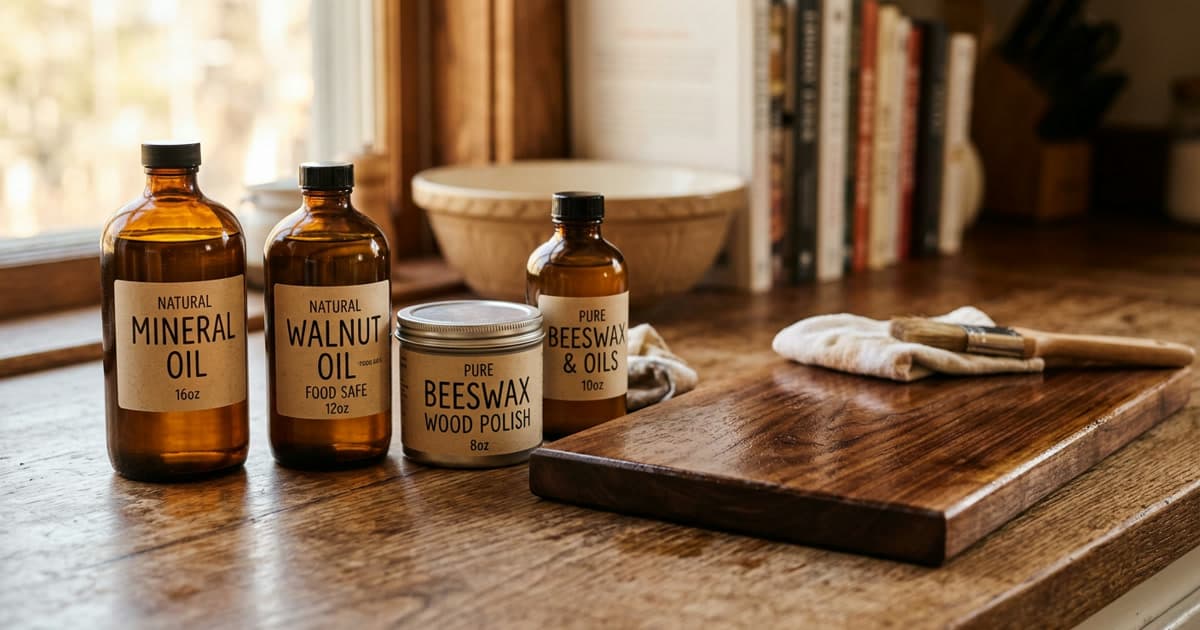
If you own a wooden cutting board, serving tray, or any wooden kitchen utensil, oiling it regularly is the single most important thing you can do to keep it in great condition. Oil protects the wood from moisture, prevents cracking and warping, and keeps the surface looking rich and alive. But walk into any store or search online and you will find a confusing range of options. Mineral oil, walnut oil, coconut oil, tung oil, linseed oil. Which one should you actually use?
We have tested and worked with every common wood oil in our Jacksonville, FL workshop over the years. Here is our honest breakdown of what works, what is acceptable in a pinch, and what you should absolutely avoid putting on anything that touches your food.
Food-Grade Mineral Oil: The Gold Standard
If you take away one thing from this article, let it be this: food-grade mineral oil is the best all-around oil for wooden cutting boards and kitchen items. It is the oil we recommend to every customer, and it is what we use to finish every piece that leaves our shop.
Here is why mineral oil wins. It is completely food-safe and FDA-approved for food contact surfaces. It is odorless and tasteless, so it will not affect your food in any way. Most importantly, it does not go rancid. Ever. This is the critical advantage over cooking oils, which we will get into later.
Mineral oil is also inexpensive and widely available. You can find it at any pharmacy, usually for a few dollars a bottle. Some stores sell it labeled specifically as "cutting board oil" or "butcher block oil" at a markup, but it is the same product. Just make sure it says "food-grade" or "USP-grade" on the label.
When applied regularly, mineral oil soaks into the wood fibers and creates a moisture barrier that protects against water damage, staining, and drying. It keeps the wood supple and prevents the kind of cracking and splitting that happens when wood dries out over time.
How to Apply Mineral Oil
The application process is simple and takes just a few minutes. Start with a clean, dry board. Pour a generous amount of mineral oil directly onto the surface. Using a clean, lint-free cloth or paper towel, spread the oil evenly across the top, bottom, sides, and all edges. Do not be stingy. You want the wood to drink up as much oil as it can.
Let the oil soak in for at least four to six hours, or overnight if possible. The wood will absorb what it needs. In the morning, wipe off any excess oil that has not been absorbed. The board should feel smooth and conditioned, not wet or greasy.
For a brand-new board, apply two to three coats over consecutive days before using it for the first time. This initial seasoning saturates the wood fully and creates a solid foundation of protection. After that, a single coat once a month is usually enough for boards in regular use. For our full maintenance schedule and care tips, visit our complete wood care guide.
Beeswax and Board Cream: The Perfect Partner
Mineral oil does its job below the surface, soaking into the wood fibers and conditioning from the inside. Beeswax works on the surface, creating a protective barrier that repels water and provides a smooth, slightly buffed finish. The two together give your board the best possible protection.
Board cream, sometimes called board butter, is typically a blend of mineral oil and beeswax, often with a small amount of carnauba wax for added durability. You apply it after oiling, once the mineral oil has been fully absorbed. Rub it into the surface in circular motions with a clean cloth, let it set for a few hours, and then buff off the excess.
The result is a board with a subtle sheen and a silky feel. The wax layer helps the oil last longer between applications and provides extra resistance to water and staining. We include a small amount of board cream with many of our pieces, and it is well worth picking up a tin for ongoing maintenance.
Walnut Oil: A Natural Alternative
Walnut oil is a popular choice among people who prefer a plant-based option. It dries harder than mineral oil, creating a semi-protective film on the wood surface, and it deepens the color of darker woods like walnut beautifully.
The advantages of walnut oil are real. It is food-safe, it enhances the natural grain of the wood, and it provides a slightly harder finish than mineral oil alone. Some woodworkers swear by it.
However, there are two important caveats. First, walnut oil can go rancid over time, though it takes much longer than cooking oils because it is a drying oil that polymerizes (hardens) as it cures. This makes it more stable than, say, olive oil, but less permanent than mineral oil. Second, and more importantly, walnut oil is a tree nut product. If anyone in your household has a nut allergy, do not use walnut oil on any food contact surface. This is a serious safety consideration that rules it out for many families.
If you do use walnut oil, make sure you buy refined walnut oil specifically labeled for food or wood finishing. Raw, cold-pressed walnut oil from the cooking aisle is more likely to go rancid.
Coconut Oil: Proceed with Caution
Coconut oil shows up frequently in online recommendations for cutting board care, and we understand why. It is natural, it smells pleasant, and most people already have some in their kitchen. But we generally do not recommend it as your primary board oil.
The issue is that coconut oil, even refined coconut oil, can eventually go rancid when absorbed into wood. It takes longer than other cooking oils because of its high saturated fat content, but it does happen. When it goes rancid inside the wood fibers, you end up with a stale, off-putting smell that is very difficult to get rid of.
Fractionated coconut oil (MCT oil) is a better option if you want to go the coconut route. The fractionation process removes the long-chain fatty acids that cause rancidity, making it much more stable. It will not go rancid the way regular coconut oil can. That said, food-grade mineral oil is still more reliable and far less expensive.
Oils You Should Never Use
There are several oils that seem like they would work but will actually damage your board or create food safety issues. Here is what to avoid:
- Olive oil. This is the most common mistake people make. Olive oil goes rancid quickly when it soaks into wood, creating a persistent unpleasant odor and taste that is nearly impossible to remove. It does not matter how high quality the olive oil is. Do not use it on cutting boards.
- Vegetable oil, canola oil, and other cooking oils. Same problem as olive oil. All of these are non-drying oils that will go rancid inside the wood. They might seem fine for the first week, but within a month or two, your board will smell off.
- Flaxseed oil (linseed oil). Raw linseed oil from the hardware store is toxic and never appropriate for food contact surfaces. Even food-grade flaxseed oil, while technically safe, creates a hard, brittle finish that tends to peel and flake over time. It is also very slow to cure and can develop a gummy texture if applied too thickly.
- Tung oil. Pure tung oil is technically food-safe once fully cured, but the curing process takes weeks and the oil has a strong odor during that time. Many products labeled "tung oil" are actually blends containing solvents and driers that are not food-safe at all. Unless you know exactly what you are buying and are willing to wait for a full cure, skip it for kitchen items.
What About "Cutting Board Oil" Products?
Many kitchen stores sell products specifically labeled as cutting board oil, butcher block oil, or wood conditioner. These are generally fine to use, but check the ingredients before buying. Most of them are simply food-grade mineral oil with nice packaging and a higher price tag. Some add beeswax, carnauba wax, or vitamin E, which are all good additions.
The main thing to watch for is any product that lists solvents, petroleum distillates, or synthetic fragrances in the ingredients. These are not food-safe and have no business on a cutting board. Stick with products that contain only food-grade mineral oil, beeswax, and natural waxes.
How Often Should You Oil?
The frequency depends on how much you use your board and the climate you live in. As a general rule:
- New boards. Two to three coats before first use, one day apart.
- Daily use boards. Once every two to three weeks.
- Regular use boards. Once a month.
- Occasional use boards. Every six to eight weeks.
Here in Jacksonville, our humid climate is actually somewhat kind to wood since the moisture in the air helps prevent over-drying. But during the winter months when indoor air gets drier, you may want to increase your oiling frequency. If you notice the wood starting to look pale, dry, or chalky, it is telling you it needs oil.
The water test is a quick way to check. Sprinkle a few drops of water on the board. If the water beads up, the board is well-oiled. If it absorbs quickly and darkens the wood, it is time for a fresh coat. For a more detailed breakdown on seasonal adjustments, take a look at our post on seasonal wood care and humidity.
Our Recommendation
After years of building and finishing hardwood kitchen pieces, our advice is straightforward. Use food-grade mineral oil as your primary wood conditioner. Apply it regularly. Add a beeswax-based board cream periodically for extra protection. Avoid cooking oils entirely. That combination will keep any wooden kitchen item looking and performing its best for decades.
If you are looking for a wooden cutting board, serving tray, or kitchen piece that is worth taking care of, browse our handcrafted collection. Every piece we build is finished with mineral oil and beeswax, ready to become a lasting part of your kitchen. And if you have something specific in mind, reach out about a custom order.
Looking for the perfect cutting board?
Every board we make is built by hand in our Jacksonville, FL workshop using premium hardwoods. Browse our collection or request a custom piece.