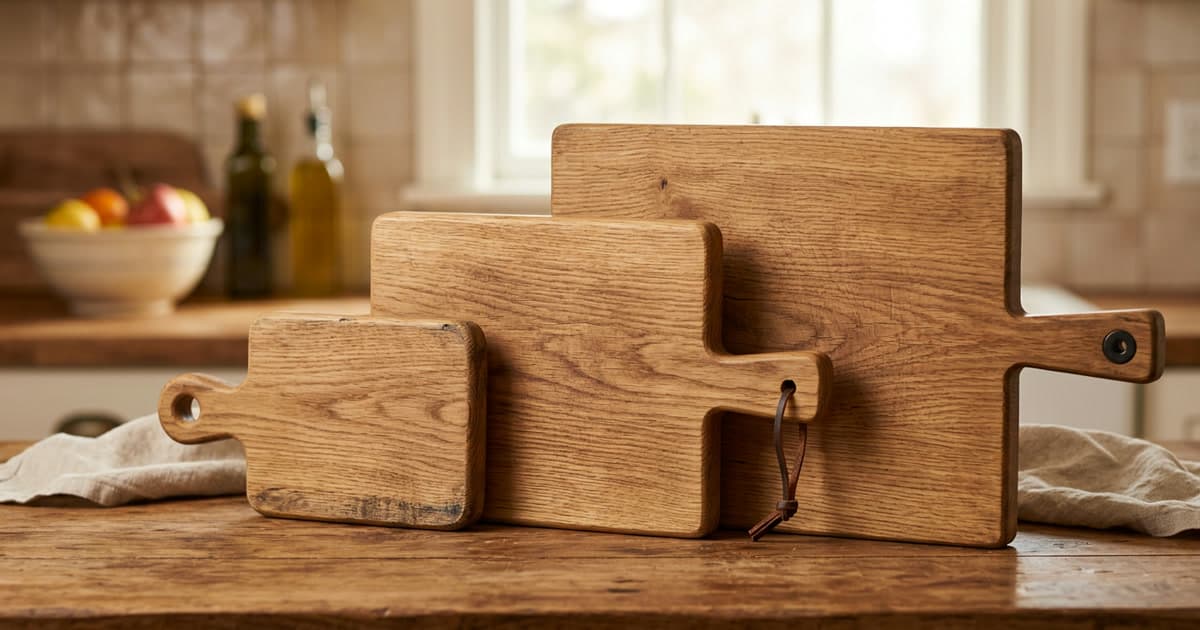
Buying a cutting board seems straightforward until you start thinking about size. Too small and you are constantly chasing food off the edges. Too large and it takes over your counter, crowds the sink, and becomes a chore to clean. The right size is the one that fits the way you actually cook, in the kitchen you actually have.
We build cutting boards in every size at our Jacksonville, FL workshop, and over the years we have had hundreds of conversations with customers trying to figure out what will work best for them. The answer is almost never "get the biggest one." It depends on your counter space, what you cook most often, how many people you are feeding, and whether you want the board to pull double duty as a serving piece. Here is how to think through each of those factors.
Why Size Matters More Than You Think
A cutting board is the most-used surface in your kitchen. You touch it more than your stovetop, your oven, or your sink. When the size is right, you do not think about it. Your hands move freely, the food stays where you put it, and prep feels smooth and efficient.
When the size is wrong, you notice it constantly. A board that is too small forces you to stop and transfer chopped ingredients to a bowl before you can continue cutting. That sounds minor, but multiply it by every meal, every day, and it becomes a real source of friction. A board that is too large creates a different kind of problem. It does not fit comfortably next to the stove. It bumps into the backsplash. Washing it in the sink turns into a wrestling match.
The goal is a board that gives you enough workspace to move comfortably while fitting naturally into your kitchen layout. Let us walk through the three main size categories and who each one is best suited for.
Small Cutting Boards: 8 to 12 Inches
Small boards are the utility players of the kitchen. They are not meant to be your primary prep surface for a full meal, but they are perfect for the quick tasks that come up throughout the day. Slicing an apple. Cutting a lime for a drink. Dicing an onion for a weeknight pasta. Mincing garlic. These are all jobs where pulling out a large board feels like overkill.
A small board is also the right choice if you have a compact kitchen with limited counter space. In apartments and galley kitchens, a 10 by 8 inch board might be the largest size that fits comfortably next to the stove while leaving room for other prep. That is perfectly fine. You can cook wonderful meals on a small board. You just need to work in stages, clearing finished ingredients before moving on to the next.
Small boards also make excellent serving pieces. A walnut board in the 10 to 12 inch range is the perfect size for setting out cheese and crackers for two, serving a sliced baguette, or presenting a small appetizer. If you already own a larger board for daily prep, a small board fills the gaps that a large one cannot.
Medium Cutting Boards: 14 to 18 Inches
This is the sweet spot for most home cooks, and it is the size we recommend most often. A medium cutting board, typically around 15 by 10 or 18 by 12 inches, gives you enough room to break down a whole chicken, chop a pile of vegetables for a stir-fry, or dice onions and herbs for a large pot of soup without feeling cramped.
The medium size fits comfortably on most standard kitchen counters. You can set it beside the stove with room to spare. It fits in a standard kitchen sink for washing, though it may need to go in at an angle. It is heavy enough to stay put on the counter but light enough that moving it around the kitchen is not a burden.
If you cook for one or two people most nights and occasionally prepare larger meals for family gatherings or dinner parties, a medium board covers the full range. You will have enough space for a weeknight stir-fry and enough surface area to lay out ingredients for a more involved weekend recipe.
For daily cooking, a medium edge grain board in hard maple or walnut is hard to beat. It offers the best combination of workspace, durability, and manageability. If you are buying your first quality cutting board and you are not sure what size to choose, start here. You can read more about how wood species affect performance in our guide to cherry, maple, and walnut cutting boards.
Large Cutting Boards: 20 Inches and Up
Large boards are for serious home cooks and people who regularly feed a crowd. If your typical dinner involves prepping six or seven different ingredients, if you break down whole cuts of meat at home, or if you are cooking for four or more people most nights, a large board will change how you work in the kitchen.
With a board in the 20 by 14 inch range or larger, you have room to keep chopped ingredients on one side while you continue cutting on the other. That eliminates the constant transfer to bowls and keeps everything visible and within reach. Professional cooks work this way, and there is a reason. It is faster, more organized, and more enjoyable.
A large cutting board is also the best option if you want a piece that doubles as a serving surface for entertaining. A 24 inch walnut board loaded with charcuterie, cheese, fruit, and nuts is a centerpiece that anchors a dinner party. If you host regularly, a large board pays for itself in presentation value alone. Our guide to building the perfect charcuterie board covers how to put together a spread that looks as good as it tastes.
The trade-off with a large board is weight and storage. A thick, 22-inch hardwood board is heavy. Plan on storing it upright, leaning against the backsplash or in a dedicated board rack. It will not fit easily in a cabinet. And washing it requires a large sink or a quick wipe-down on the counter followed by a careful rinse.
Match the Board to Your Counter Space
Before you settle on a size, take a look at where you actually prep food. Not the whole counter. The specific spot where you stand and chop. Measure the available space between the edge of the counter and whatever is next to it, whether that is the stove, a coffee maker, or the wall.
Your cutting board should sit comfortably in that space with a few inches of clearance on each side. You do not want it hanging over the counter edge, which is unstable and dangerous. You also do not want it pushed flush against the backsplash, because that limits your knife stroke on the back side of the board.
A good rule of thumb is that your board should take up no more than about two-thirds of your available prep area. That leaves room for a bowl to collect scraps, a plate for finished ingredients, and enough open counter to set down a knife or grab a towel.
Consider How Many People You Cook For
The number of servings you typically prepare is one of the most reliable indicators of what board size you need. Here is a general framework:
- Cooking for one or two. A medium board (14 to 16 inches) handles daily meals comfortably. A small board is fine for quick snacks and single-ingredient tasks.
- Cooking for three or four. A medium to large board (16 to 20 inches) gives you the workspace to prep multiple ingredients without feeling crowded.
- Cooking for five or more. A large board (20 inches and up) is worth the investment. When you are chopping vegetables for a big pot of chili or prepping a holiday meal, the extra real estate makes a noticeable difference in speed and comfort.
Keep in mind that these are guidelines, not rules. If you cook elaborate meals for two and enjoy the process of chopping and prepping, a larger board might suit you better than a strict headcount would suggest. The goal is to match the board to your cooking style, not just to the number of place settings.
Think About Thickness Too
Size gets all the attention, but thickness matters just as much for daily use. A thicker board is heavier and more stable on the counter. It absorbs the impact of chopping without bouncing or sliding. It also resists warping better over time because there is more material to hold its shape.
For edge grain boards, we recommend at least one inch of thickness. For end grain boards, an inch and a half is ideal. Thinner boards might look sleek, but they flex under pressure, slide on the counter, and are more prone to cupping and warping as they go through cycles of wetting and drying.
A thicker board also gives you more years of use. Over decades of oiling and the occasional light sanding, the board slowly wears down. Starting with a generous thickness means the board stays functional and beautiful for far longer. If you want to understand the difference between end grain and edge grain construction, our detailed comparison on end grain vs edge grain cutting boards covers the benefits of each style.
Do You Want It to Serve Double Duty?
Many of our customers use their cutting boards for both food prep and serving, and that is a great approach as long as you size the board accordingly. A board that works beautifully for chopping vegetables might be too small to present a cheese spread for guests. If you want one board that does both jobs, lean toward the larger end of whatever size range you are considering.
Alternatively, owning two boards in different sizes gives you the most flexibility. A medium board handles daily cooking. A large board comes out for entertaining and bigger prep jobs. This is the setup we see most often in kitchens that take cooking seriously, and it means neither board is compromised by trying to do everything.
Finding the Right Board for You
The right cutting board size is the one that disappears into your routine. You pull it out, set it on the counter, and it fits. It gives you room to work without taking over the kitchen. It is heavy enough to stay still but manageable enough that you actually use it every day rather than leaving it in a cabinet.
Every cutting board we build at Schmidt Woodcraft is available in a range of sizes, from compact prep boards to large statement pieces designed for serious cooking and entertaining. Browse our collection to find the size that fits your kitchen, or request a custom board built to your exact dimensions. We are happy to help you figure out the perfect fit.
Looking for the perfect cutting board?
Every board we make is built by hand in our Jacksonville, FL workshop using premium hardwoods. Browse our collection or request a custom piece.