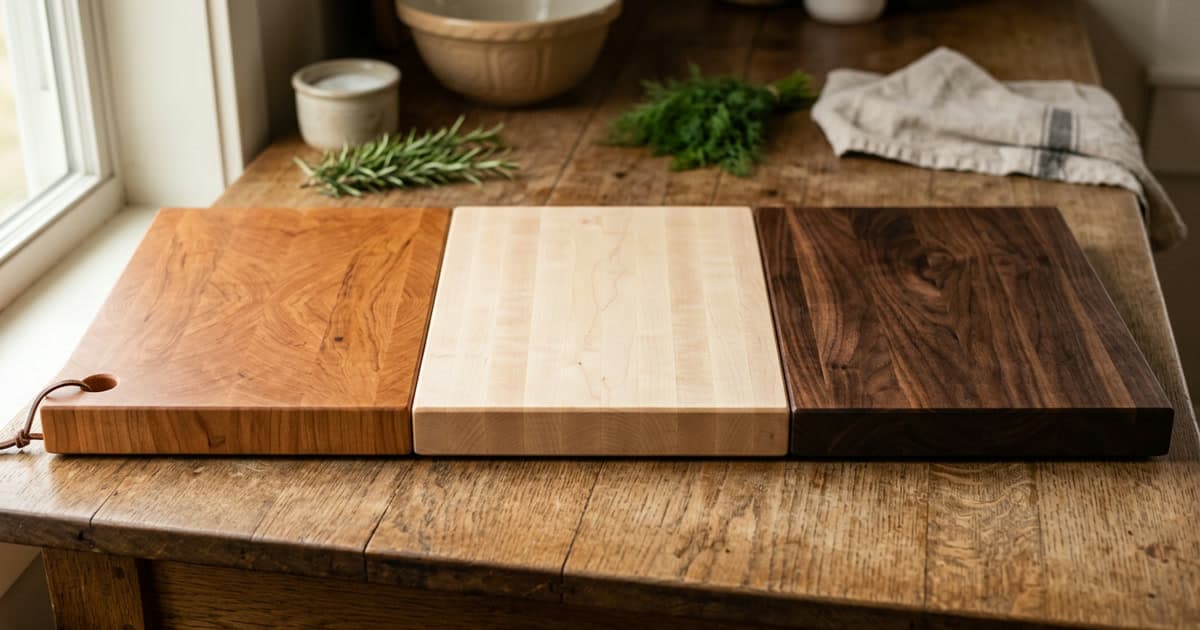
When you start shopping for a quality cutting board or kitchen piece, you will quickly run into three names: cherry, maple, and walnut. These are the big three of kitchen hardwoods, and for good reason. Each one is food-safe, durable, and beautiful in its own right. But they are not interchangeable, and understanding the differences will help you choose the wood that fits your kitchen, your cooking style, and your taste.
We work with all three of these species daily in our Jacksonville, FL workshop, and we have strong opinions about when each one is at its best. This guide breaks down the practical differences so you can make a confident choice.
Hardness and Durability
The Janka hardness scale measures how much force it takes to embed a steel ball into a piece of wood. It is the most commonly used benchmark for comparing wood durability, and it matters for kitchen use because your cutting board needs to withstand knife impacts day after day.
- Hard maple: 1,450 lbf. The hardest of the three by a significant margin. Maple resists denting, scoring, and wear better than almost any domestic hardwood. This makes it incredibly durable, but it is also the toughest on knife edges.
- Walnut: 1,010 lbf. A middle-ground hardness that balances durability with knife-friendliness. Walnut boards resist wear well while being noticeably gentler on your blades than maple.
- Cherry: 950 lbf. The softest of the three, though still firmly in the hardwood category. Cherry will show knife marks a bit sooner than walnut or maple, but those marks tend to blend naturally into the grain over time.
If knife preservation is your top priority, walnut and cherry are the better choices. If you want the board that will look the most pristine after years of heavy use, maple wins on pure toughness.
Color and Appearance
The visual difference between these three woods is dramatic, and it is often the deciding factor for buyers who want their kitchen pieces to complement their space.
Maple is pale and clean. Its heartwood ranges from creamy white to light golden tan, sometimes with subtle pinkish tones. The grain is tight and uniform, giving maple pieces a smooth, modern feel. Maple works beautifully in bright, contemporary kitchens where you want a light, airy look.
Walnut sits at the other end of the spectrum. Its heartwood is a rich chocolate brown that can include purple, gray, and even reddish undertones. Walnut's grain tends to be more open and flowing, with dramatic patterns that give each piece a distinct personality. It pairs naturally with mid-century modern and darker kitchen aesthetics.
Cherry falls in between. Fresh cherry has a warm pinkish-tan color that deepens significantly over time into a rich, reddish-brown. This color evolution is one of cherry's most appealing characteristics. A cherry board at five years old looks nothing like it did when it was new, and that transformation is part of the experience.
How Each Wood Ages
All three woods change over time, but they age in different ways, and understanding this helps set the right expectations.
Maple tends to darken slightly with age, shifting from bright white-cream toward a warmer honey tone. The change is gradual and subtle. Maple's light color does mean that stains from beets, berries, and other strongly pigmented foods can be more visible, at least until the next oiling.
Walnut lightens over time, moving from deep chocolate toward a warmer golden-brown. This mellowing process gives walnut pieces a settled, mature look that many people find more appealing than the original color. Regular oiling slows this transition and keeps the deeper tones present longer.
Cherry is the most dramatic of the three. It darkens significantly with light exposure, shifting from pinkish-tan to a deep, warm reddish-brown. This is not staining or damage. It is the wood's natural photochemical response, and it happens whether the piece is used daily or sits on display. Cherry is the wood for people who want their kitchen piece to tell a visible story of time passing.
Grain and Texture
The grain pattern of your cutting board affects both how it looks and how it performs. Tighter grain generally means a smoother cutting surface, while more open grain creates more visual interest.
Maple has the tightest, most uniform grain of the three. This is one reason it has been the traditional choice for butcher blocks in professional kitchens. The surface is smooth and consistent, and it resists absorbing liquids and food particles effectively.
Walnut has a moderately open grain that creates beautiful flowing patterns. The texture is slightly more tactile than maple, and the grain accepts oil finishes deeply, which is what gives walnut its signature rich appearance. Walnut's open grain does mean it benefits from regular oiling to keep the surface sealed and protected.
Cherry has a fine, straight grain that is tighter than walnut but not quite as dense as maple. Cherry pieces tend to have a smooth, almost silky feel under the hand. The grain pattern is typically more subtle and consistent than walnut's dramatic swirls, which appeals to people who prefer understated elegance. To learn more about how grain orientation affects performance, see our post on understanding wood grain.
Food Safety
All three woods are considered food-safe when properly finished with mineral oil or a food-grade wax blend. They are all hardwoods with natural antibacterial properties, meaning bacteria that land on the surface are pulled into the wood fibers where they cannot survive.
Walnut has a slight edge here due to juglone, a naturally occurring antimicrobial compound found throughout the wood. Juglone actively inhibits bacterial and fungal growth, giving walnut boards an additional layer of food safety beyond what capillary action alone provides. For a closer look at walnut's unique properties, read our post on why walnut is the king of kitchen woods.
Maple's extreme density also works in its favor for food safety. The tight grain structure simply does not allow much to penetrate the surface, making it easy to clean and resistant to staining from raw meats and juices.
Cherry performs well too, though it lacks walnut's juglone advantage and maple's extreme density. It is still a far better choice than any plastic, bamboo, or composite alternative.
Maintenance Requirements
The care routine for all three woods is essentially the same: hand wash with warm water and mild soap, dry promptly, and apply food-safe mineral oil monthly. None of these woods should ever go in the dishwasher.
Where they differ slightly is in how forgiving they are of neglect. Maple, with its tight grain, is the most resistant to drying out and can go longer between oilings without visible effects. Walnut's open grain benefits the most from regular oiling. When walnut dries out, it shows. The color fades and the surface can start to feel rough. But a single coat of mineral oil brings it right back to life.
Cherry falls in the middle. It holds oil reasonably well and does not dry out as quickly as walnut, but it benefits from consistent monthly maintenance to keep the color deep and the surface protected. Full care details for all three species are on our wood care guide.
Price Considerations
Of the three, walnut is typically the most expensive. This reflects several factors: walnut trees grow more slowly than maple, the usable heartwood yield per tree is lower, and demand for walnut in furniture and woodworking has been consistently strong for decades.
Cherry tends to fall in the middle price range. It is readily available from sustainably managed forests in the eastern United States, and the lumber quality is generally excellent.
Maple is usually the most affordable of the three, in part because it is abundant and widely harvested. Do not mistake affordability for lower quality, though. Hard maple is an outstanding kitchen wood, and many professional chefs prefer it above all others.
The price difference between species is typically modest in the context of a handmade piece that will last decades. We would always encourage you to choose the wood that appeals to you visually and functionally, rather than making the decision on price alone.
Which Wood Is Right for You
After years of building with all three species, here is our honest recommendation:
- Choose maple if you want the most durable, stain-resistant cutting surface. If you cook daily with heavy knives and want a board that shrugs off hard use, maple is your wood. It is also the best choice if you prefer a light, clean aesthetic in your kitchen.
- Choose walnut if you want the best all-around kitchen wood. It balances beauty, durability, and food safety better than any other option. If you are buying one board and want it to do everything well, walnut is the safe bet.
- Choose cherry if you appreciate a piece that evolves over time. Cherry rewards patience with a rich, warm patina that gets more beautiful with every year. It is the choice for someone who values character and warmth over raw performance.
You also do not have to choose just one. Some of our most popular pieces combine two or all three species in edge grain or end grain patterns. The contrast between dark walnut and light maple, or the warmth of cherry against both, creates pieces that are visually striking and functionally excellent.
See Them in Person
Photos can only do so much when it comes to showing the color, grain, and feel of real wood. We build every piece by hand and photograph each one individually so you can see the actual board you will receive.
Browse our current collection to see cutting boards, serving boards, and kitchen pieces in all three species. If you have a specific wood preference or want a combination piece built to your dimensions, submit a custom order request and we will work with you to create exactly what you are looking for.
Looking for the perfect cutting board?
Every board we make is built by hand in our Jacksonville, FL workshop using premium hardwoods. Browse our collection or request a custom piece.