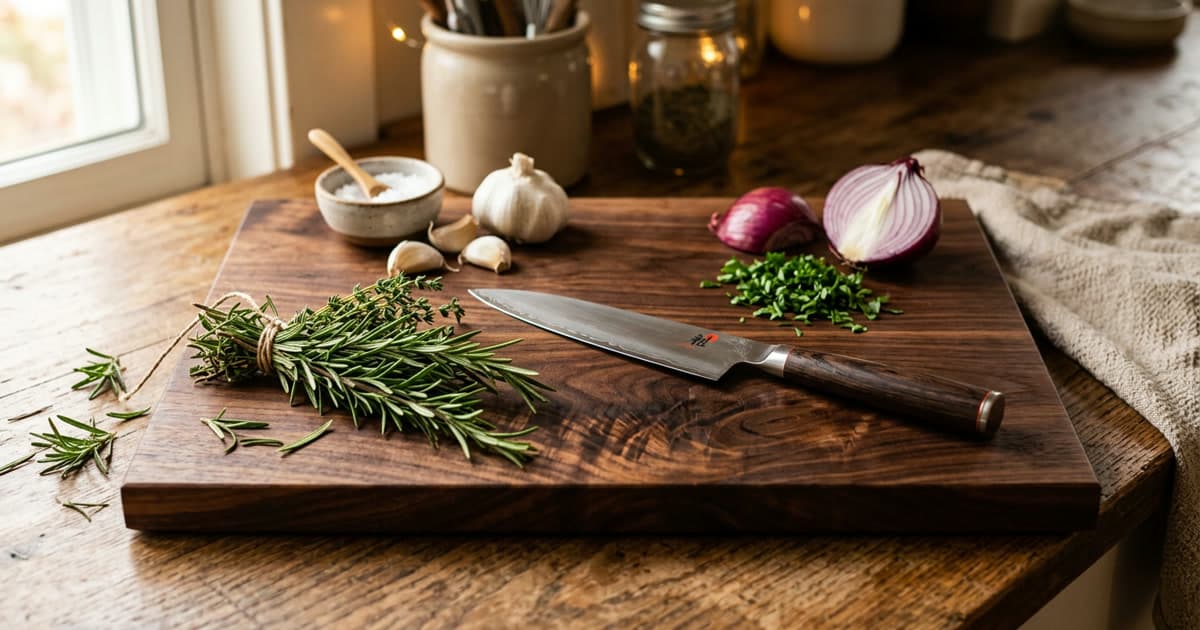
Walk into any well-equipped kitchen and you will likely spot a walnut cutting board on the counter. There is a reason for that. Walnut has earned its reputation as the premier kitchen wood through centuries of use, and modern science has confirmed what craftspeople have known all along: walnut is uniquely suited for food preparation surfaces.
At Schmidt Woodcraft, walnut is the wood we reach for most often in our Jacksonville, FL workshop. It is not just because of how it looks, though it is certainly beautiful. It is because walnut delivers a combination of properties that no other domestic hardwood can match. Here is why we consider it the king of kitchen woods.
The Science Behind Walnut's Antimicrobial Properties
Walnut trees produce a compound called juglone, which is found throughout the wood, bark, leaves, and roots. Juglone is a natural antimicrobial agent that inhibits the growth of bacteria and fungi. This is not folklore or marketing. It is well-documented chemistry.
When bacteria land on a walnut cutting board surface, juglone works alongside the wood's natural capillary action to create an environment where bacteria simply cannot thrive. The wood fibers pull moisture and bacteria below the surface, where the combination of a dry environment and juglone's antimicrobial activity eliminates them.
This gives walnut an advantage that even other excellent kitchen woods like maple and cherry cannot fully match. While all hardwoods have some natural antibacterial properties, walnut's juglone content gives it an extra layer of food safety that is built right into the cellular structure of the wood.
Hardness That Hits the Sweet Spot
When it comes to kitchen use, harder is not always better. A wood that is too hard will dull your knife edges quickly. A wood that is too soft will scar easily and wear out fast. Walnut sits in a sweet spot that works well for both your knives and the board itself.
On the Janka hardness scale, which measures a wood's resistance to denting and wear, walnut comes in at around 1,010 pounds-force. For comparison, hard maple sits at 1,450 and cherry at about 950. Walnut is firm enough to resist deep knife scars while being gentle enough that it will not rapidly dull your blades.
This balance matters more than most people realize. Professional chefs and serious home cooks invest in quality knives, and they need a cutting surface that will not destroy that edge after a few uses. Walnut respects your knives while still holding up to years of daily cutting, chopping, and slicing.
A Grain Pattern That Stands Alone
Walnut's grain is unlike anything else in the domestic hardwood family. The patterns range from straight and uniform to sweeping, cathedral-like figures that draw the eye immediately. Every board is different because every tree grows differently, responding to light, wind, soil, and decades of seasons.
The color palette is equally distinctive. Walnut heartwood ranges from a warm chocolate brown to deep purple-brown tones, often with lighter sapwood streaks that create natural contrast. Some boards feature dramatic swirls where the grain changes direction around knots or branches. Others have a quieter, more consistent figure that feels refined and understated.
We select our walnut lumber carefully, looking for boards with interesting grain character while avoiding defects that would compromise structural integrity. The result is a cutting board or serving piece that functions as both a kitchen tool and a piece of natural art. You can see the variety across our walnut kitchen pieces.
How Walnut Ages Over Time
One of walnut's most appealing qualities is the way it changes with age and use. Fresh walnut has a rich, sometimes slightly purple-toned color that gradually mellows into a warm, golden brown over the years. This is not deterioration. It is the wood settling into its mature character.
Exposure to light and regular oiling with food-safe mineral oil accelerate this process. After a year or two of regular use, a walnut cutting board develops a patina that simply cannot be replicated. The surface takes on a depth and warmth that makes the piece feel like it has always belonged in your kitchen.
Compare this to plastic or composite cutting boards, which only look worse with age. Knife scars, staining, and warping are signs of wear and decline. On a walnut board, the subtle marks of use blend into the grain and become part of the piece's story. A well-maintained walnut board at ten years old is more beautiful than it was on day one.
Walnut Compared to Other Kitchen Woods
Walnut is not the only good kitchen wood. Maple and cherry both have legitimate strengths. But when you stack them up side by side, walnut consistently comes out on top for most kitchen applications.
- Walnut vs. maple. Maple is harder and lighter in color, which some people prefer. But maple's extra hardness is tougher on knife edges, and its light color shows stains more readily. Walnut's darker tones hide everyday kitchen marks gracefully.
- Walnut vs. cherry. Cherry is a lovely wood that develops a beautiful reddish patina. It is slightly softer than walnut, which means it will show knife marks a bit more quickly. Cherry also lacks walnut's juglone advantage. For a deeper dive into how these three woods compare, read our cherry, maple, and walnut comparison guide.
- Walnut vs. bamboo. Bamboo is technically a grass, not a wood. It is very hard, which sounds good but actually dulls knives quickly. Bamboo boards are typically made from thin strips glued together with adhesives that can degrade over time, especially with moisture exposure.
Why We Love Working with Walnut
From a craftsman's perspective, walnut is a pleasure to work with. It machines cleanly, sands to a smooth finish without excessive effort, and takes oil finishes beautifully. The open grain absorbs mineral oil evenly, which means the finish looks consistent and rich across the entire surface.
Walnut is also dimensionally stable compared to many other hardwoods. This means it resists warping and cupping better over time, which is critical for a flat cutting surface that needs to sit firmly on a countertop. In our Jacksonville workshop, where Florida's humidity can challenge even the best-dried lumber, walnut's stability is something we genuinely appreciate.
We source our walnut from sustainably managed forests in the eastern United States. American black walnut is a responsibly harvested species, and using domestic lumber keeps our supply chain short and our environmental footprint small.
Best Uses for Walnut in the Kitchen
Walnut works beautifully across a wide range of kitchen applications:
- Cutting boards. This is where walnut truly shines. Whether edge grain for everyday use or end grain for the ultimate cutting surface, walnut delivers on every front.
- Charcuterie and serving boards. Walnut's dark tones create a stunning backdrop for cheeses, cured meats, fruits, and crackers. Food simply looks better on walnut.
- Wooden utensils. Spoons, spatulas, and serving tools made from walnut are durable, heat-resistant, and gorgeous in the hand.
- Knife blocks and organizers. Walnut's stability makes it ideal for pieces that need to hold their shape precisely over many years of use.
Caring for Your Walnut Kitchen Pieces
Walnut is low-maintenance, but a small amount of regular care will keep it performing and looking its best for decades. Wash by hand with warm water and mild soap after each use. Never put a walnut board in the dishwasher, as the extreme heat and moisture will cause cracking.
Once a month, apply a thin coat of food-safe mineral oil. Let it soak in for a few hours or overnight, then wipe off any excess. This keeps the wood hydrated, prevents drying and cracking, and maintains that rich, deep color that makes walnut so attractive. For complete care instructions, visit our wood care guide.
A Kitchen Upgrade That Lasts a Lifetime
Choosing walnut for your kitchen is not just about buying a cutting board. It is about investing in a tool that gets better with every year of use. The antimicrobial properties keep your food prep surface naturally clean. The balanced hardness protects both the board and your knives. And the beauty of the grain turns a functional kitchen item into something you are genuinely proud to own.
Every walnut piece we build at Schmidt Woodcraft is made by hand, one at a time, from lumber we have personally selected. We stand behind the quality because we know what this wood can do when it is treated with the care it deserves.
Ready to bring walnut into your kitchen? Explore our collection or request a custom piece built to your specifications.
Looking for the perfect cutting board?
Every board we make is built by hand in our Jacksonville, FL workshop using premium hardwoods. Browse our collection or request a custom piece.