When you shop for a wooden cutting board or kitchen piece, you will often see terms like "end grain," "edge grain," and "face grain." These are not just marketing buzzwords. They describe how the wood was cut and oriented, and that orientation has a real impact on how the piece performs, how long it lasts, and how it looks on your counter.
You do not need to be a woodworker to understand grain. In fact, knowing the basics will make you a much more informed buyer, and it will help you appreciate why some wooden pieces cost more than others. Here is a straightforward explanation of what grain means and why it matters.
What Wood Grain Actually Is
Every tree grows by adding layers of new cells each year. These cells form long, tube-like fibers that run vertically up the trunk, carrying water and nutrients from the roots to the branches. When a tree is cut into lumber, those fibers create visible patterns in the wood. That pattern is what we call grain.
The direction, density, and arrangement of those fibers determine the wood's appearance and performance characteristics. A board cut one way will have very different properties than the same piece of wood cut at a different angle. This is why grain orientation is so important in woodworking, and especially in kitchen items that need to withstand daily use.
Think of it this way: a bundle of drinking straws held together behaves very differently depending on whether you push down on the ends of the straws or against their sides. Wood fibers work on the same principle. The direction you expose matters enormously.
Face Grain: The Simple Cut
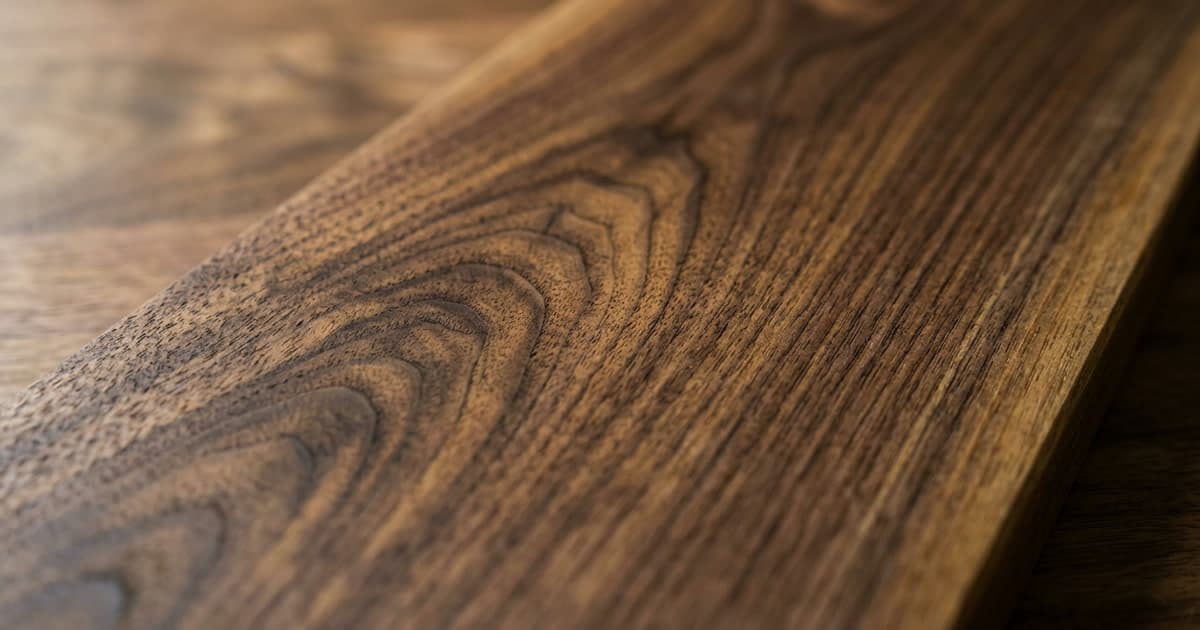
Face grain is what you see when you look at the widest surface of a standard board from the lumber yard. If you picture a plank of wood lying flat, the broad face showing you long, flowing grain lines is the face grain. This is the most common way wood is used in furniture, flooring, and basic woodworking.
Face grain cutting boards are the simplest and least expensive to produce. A single wide plank, or a few planks glued side by side, creates the cutting surface. The grain runs horizontally across the board, parallel to the cutting surface.
The downside of face grain for kitchen use is durability. When a knife cuts across the face grain, it severs the wood fibers, creating visible knife scars that accumulate over time. Face grain boards also tend to be thinner and lighter, which means they can warp more easily with moisture exposure. While face grain pieces can make attractive serving boards and platters, they are not the best choice for a primary cutting surface that will see heavy daily use.
Edge Grain: The Workhorse
Edge grain boards are made by turning those lumber planks on their sides and gluing the narrow edges together. Instead of showing the wide face of each board, the cutting surface now shows the edges, with the grain running vertically through the thickness of the board.
This orientation creates a much more durable cutting surface. When your knife strikes edge grain, it is cutting between the wood fibers rather than across them. The result is fewer visible knife marks, better resistance to wear, and a surface that stays smoother over years of use.
Edge grain boards are also visually distinctive. The alternating strips of wood create a clean, linear pattern that is especially striking when multiple wood species are combined. A board with alternating strips of dark walnut and light maple, for example, creates a classic look that works in any kitchen. Most of the boards in our product collection use edge grain construction.
Edge grain represents the best balance of durability, beauty, and value for most home cooks. It is significantly more durable than face grain, less expensive than end grain, and well-suited for everyday food preparation.
End Grain: The Premium Choice
End grain is the gold standard for cutting board construction, and it is the most demanding to build. An end grain board is made by cutting wood into short blocks and arranging them so the cut ends of the wood fibers face up, forming the cutting surface. When you look at an end grain board from above, you are looking down at the ends of millions of tiny wood fibers.
This orientation gives end grain boards their remarkable properties. When a knife strikes the surface, the blade slides between the fibers rather than cutting through them. The fibers separate, the knife passes through, and then the fibers close back together. This self-healing action means end grain boards show fewer knife marks and maintain a smoother surface over time than any other grain orientation.
End grain is also the most knife-friendly surface. Because the blade is not severing fibers, it experiences less resistance and maintains its edge longer. Professional chefs who invest in quality knives often prefer end grain boards for exactly this reason.
The classic checkerboard pattern of an end grain board is also visually stunning. Each small block shows a slightly different arrangement of grain, creating a mosaic of natural patterns that becomes more interesting the longer you look at it.
How Grain Affects Food Safety
Grain orientation plays a role in food safety as well. When bacteria land on a wooden cutting surface, the wood fibers pull them below the surface through capillary action. Once below the surface, bacteria enter a dry environment where they cannot survive.
End grain boards are particularly effective at this because the exposed fiber ends act like tiny tubes, drawing moisture and bacteria downward quickly. Edge grain boards provide good capillary action too, though not quite as aggressively as end grain. Face grain, with its sealed fiber surfaces, is the least effective at pulling bacteria below the surface, though it still outperforms plastic.
Regardless of grain orientation, all three types benefit from regular oiling with food-safe mineral oil. The oil fills the spaces between fibers, creating a protective barrier that helps keep the surface clean and prevents excessive moisture absorption. For a full breakdown of food-safe finishes and why they matter, take a look at our post on food-safe wood finishes.
Grain and Visual Character
Beyond performance, grain orientation dramatically affects how a piece looks. This is where personal preference plays the biggest role in your decision.
Face grain shows the most of the wood's natural figure, the sweeping cathedral patterns, the subtle color variations, the flowing lines that make each piece of wood unique. If you want a piece that showcases the tree's natural beauty in the most expansive way, face grain does that beautifully. This makes face grain ideal for serving platters, wall art, and decorative pieces where visual impact is the priority.
Edge grain creates a more structured, geometric look. The parallel strips of wood produce clean lines with subtle grain variation within each strip. When multiple species are combined, the pattern becomes a deliberate design statement. Edge grain strikes a balance between natural beauty and intentional design.
End grain has a unique mosaic quality. Each block reveals a cross-section of the tree's growth rings, creating a pattern of concentric circles, rays, and organic shapes that no other grain orientation can produce. End grain boards are often described as having depth because the pattern seems to recede into the surface rather than lying flat on top of it.
What Grain Should You Choose
The right grain orientation depends on how you plan to use the piece and what matters most to you. Here is our honest recommendation based on years of building and using these boards ourselves:
- For a primary cutting board used daily. Edge grain or end grain. Both will hold up to years of use. Edge grain offers the better value, while end grain offers the best performance and knife preservation.
- For serving and entertaining. Face grain or edge grain. Visual appeal is the priority here, and both orientations showcase the wood beautifully. Face grain gives you the most dramatic views of the natural figure.
- For a serious home cook or chef. End grain. The self-healing surface, knife-friendliness, and superior durability make it the professional's choice. It is the most expensive option, but it delivers the best long-term performance.
- For a gift. Any orientation works, but end grain tends to make the biggest impression. The distinctive pattern signals quality and craftsmanship immediately.
Why Grain Orientation Affects Price
You will notice that end grain boards are priced higher than edge grain, which are priced higher than face grain. This reflects the amount of material, time, and skill required to build each type.
An end grain board requires significantly more lumber than an equivalent-sized edge grain board. The wood must be cut into blocks, arranged precisely, and glued in multiple stages. Each glue-up requires careful clamping and curing time. After assembly, the board must be flattened, sanded through multiple grits, and finished. The process takes considerably longer and involves more steps where things can go wrong.
Edge grain boards involve less waste and fewer gluing steps, but they still require careful lumber selection, precise milling, and skilled assembly. Face grain boards are the most straightforward to produce, which is reflected in their lower price point.
We believe the price difference is justified by the performance difference. An end grain board from our workshop will outlast an edge grain board, and an edge grain board will outlast a face grain board. You are paying for longevity, performance, and the craftsmanship required to build it right.
Make an Informed Choice
Understanding grain takes the guesswork out of buying wooden kitchen items. Now you know what end grain, edge grain, and face grain mean, how they affect durability and food safety, and which orientation fits your needs. The next step is finding the right piece.
Browse our collection to see edge grain and end grain boards in walnut, maple, cherry, and multi-wood combinations. If you want a specific grain orientation, wood species, or size that you do not see listed, send us a custom order request and we will build it for you.
Looking for the perfect cutting board?
Every board we make is built by hand in our Jacksonville, FL workshop using premium hardwoods. Browse our collection or request a custom piece.