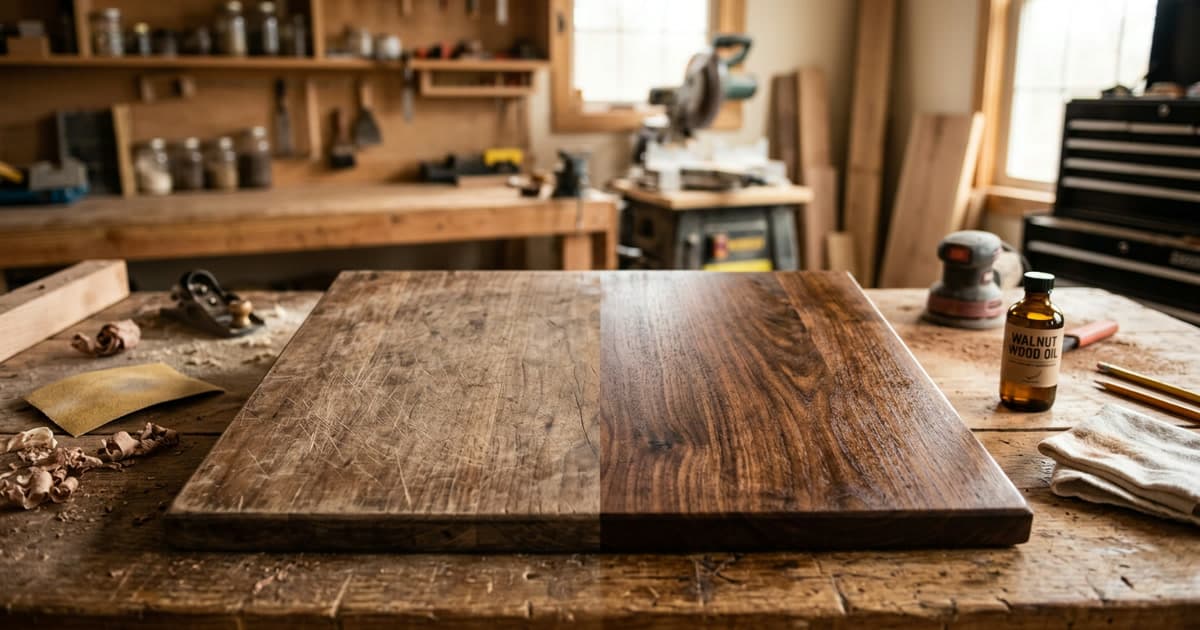
That old cutting board sitting in the back of your cabinet might look like it is past its prime. The surface is rough, the color has faded, and knife marks crisscross every inch of it. But before you throw it away, consider this: most wooden cutting boards can be restored to like-new condition with a few basic supplies and an hour or two of work.
At Schmidt Woodcraft, we build boards designed to last for decades, and part of that longevity comes from the fact that solid hardwood can be sanded down and refinished multiple times. A quality board that looks worn out is usually just dry and scarred on the surface. Underneath those knife marks, the wood is still dense, strong, and perfectly usable. Here is how to bring it back.
Assess the Board First
Before you invest time in restoration, take a few minutes to evaluate whether the board is worth saving. Not every old board can or should be restored.
A board is a good candidate for restoration if the damage is primarily cosmetic. Surface knife marks, dryness, light staining, a rough texture, and faded color are all fixable. These are signs of a board that has been used well but not maintained, and sanding and re-oiling will address all of them.
A board should probably be replaced if it has deep cracks that go through the thickness of the wood, significant warping that prevents it from sitting flat, separated glue joints where the individual strips have come apart, or persistent odors that do not go away with cleaning. These issues are structural, and sanding the surface will not fix what is happening deeper in the wood. If your board shows these signs, it may be time for a new one. We cover the full list of warning signs in our guide on when to replace your cutting board.
Also check what the board is made from. Solid hardwood boards made from maple, walnut, cherry, or similar species are excellent candidates for restoration. Boards made from bamboo, thin laminated wood, or unknown composite materials are harder to restore and may not respond well to sanding.
What You Will Need
The supplies for this project are simple and inexpensive. You probably have some of them already:
- Sandpaper in three grits: 80 (coarse), 120 (medium), and 220 (fine). Sheet sandpaper works, but a sanding block gives you a flatter, more even result.
- Food-grade mineral oil. Available at most grocery stores, pharmacies, or kitchen supply shops. A bottle will last through several oiling sessions.
- Board cream or beeswax blend (optional but recommended). This adds an extra layer of protection after oiling.
- Clean cloths or paper towels for applying oil and buffing.
- White vinegar for a pre-sanding cleaning step.
- Coarse salt and half a lemon for deodorizing, if needed.
If you have a random orbital sander, you can use it for the coarse and medium grits. But hand sanding works perfectly fine and gives you more control, especially around the edges. For a single cutting board, hand sanding takes about 20 to 30 minutes total.
Step 1: Clean the Board Thoroughly
Before sanding, give the board a deep cleaning to remove any surface residue, oils, or bacteria that have accumulated over time.
Start by washing the board with warm water and a small amount of dish soap. Scrub the entire surface with a brush or sponge, paying attention to any deep knife marks where food particles may be trapped. Rinse thoroughly.
If the board has odors, sprinkle a generous layer of coarse salt over the surface and use half a lemon as a scrubber. Work the salt across the entire board, squeezing the lemon gently as you go. The salt provides abrasion while the lemon juice neutralizes odors. Rinse again.
For stubborn stains or lingering smells, wipe the board down with a cloth dampened with white vinegar. Let it sit for five minutes, then rinse. Vinegar is a mild acid that breaks down organic residue without harming the wood.
After cleaning, dry the board thoroughly with a towel and then let it air dry completely. This is important. You cannot sand wet wood effectively. The sandpaper will clog, and the surface will not come out smooth. Let the board dry for at least a few hours, or ideally overnight, standing on its edge so air can reach both faces.
Step 2: Sand Away the Damage
This is where the real transformation happens. Sanding removes the damaged surface layer and exposes fresh, clean wood underneath.
Start with 80-grit sandpaper. This is the coarsest grit and it does the heavy lifting. Sand the entire cutting surface using long, even strokes that follow the direction of the grain. Do not sand in circles or against the grain, as this creates scratches that are visible under the finish. Apply even, moderate pressure and work systematically across the board so you remove material evenly.
The goal with 80-grit is to sand past the deepest knife marks and stains. You will see fresh, lighter wood appearing as you work. Keep going until the entire surface shows new wood and the old knife marks have been reduced or eliminated. On a heavily used board, this might mean removing an eighth of an inch of material or less. That is fine. A properly thick cutting board has plenty of wood to spare.
Switch to 120-grit sandpaper and repeat the process. This medium grit smooths out the scratches left by the 80-grit paper and refines the surface. You will notice the wood starting to feel smoother under your hand.
Finish with 220-grit sandpaper. This fine grit polishes the surface to a smooth, soft feel. After 220-grit, the wood should feel pleasant to the touch, with no rough patches or visible sanding marks. This is the surface that will accept oil and develop that rich, nourished look you want.
Do not forget to sand the edges and the bottom of the board as well. These surfaces are exposed to moisture too, and they benefit from the same attention.
Step 3: Remove Sanding Dust
After sanding, the board will be covered in fine wood dust. This needs to come off before you apply any finish, because dust trapped under the oil creates a gritty, unpleasant texture.
Wipe the board down with a damp cloth, wringing it out well so you are not reintroducing excess moisture. Go over every surface, including the edges and bottom. Let the board air dry for 15 to 20 minutes after wiping.
Some people like to use a tack cloth for this step, which is a slightly sticky cloth designed to pick up fine dust. It works well, but a damp cloth does the job too.
Step 4: Oil Generously
Now comes the rewarding part. Freshly sanded wood is thirsty, and it will drink up oil like a sponge. This is exactly what you want.
Pour a generous amount of food-grade mineral oil onto the board and spread it across the entire surface with a clean cloth. Cover the top, bottom, sides, and edges. The board will absorb the oil quickly, especially on the first coat. You will see the wood darken and the grain pop as the oil penetrates.
Let the first coat soak in for at least two hours, or better yet, overnight. In the morning, the surface will have absorbed most of the oil. Apply a second coat and let it soak in again. For a freshly sanded board, we recommend three to four coats total, applied over two to three days. Each coat saturates the wood a little more deeply and builds up the protective barrier that keeps moisture out.
After the final coat has absorbed, wipe off any excess oil with a clean, dry cloth. The board should feel smooth and nourished but not greasy or wet. If it feels sticky, let it sit a bit longer and wipe again.
Step 5: Apply Board Cream (Optional)
If you want to go the extra mile, apply a coat of board cream or a beeswax and mineral oil blend after the oil has fully absorbed. Board cream creates a surface barrier that is more durable than oil alone. It helps repel water, resist stains, and gives the wood a beautiful, subtle sheen.
Rub the cream into the surface with a clean cloth using circular motions. Let it sit for a couple of hours, then buff off the excess with a dry cloth. The board will look and feel like new, possibly even better than new because the aged wood has developed a density and character that fresh lumber does not have.
When Restoration Is Not Enough
There are limits to what home restoration can accomplish. If your board has structural problems, no amount of sanding and oiling will fix them.
Deep cracks that penetrate through the board are a food safety concern because bacteria can harbor in places you cannot reach or clean. Warping means the board no longer sits flat and stable on your counter, which is a safety issue when you are working with sharp knives. Separated glue joints will only get worse over time as moisture continues to work its way into the gap.
If your board has any of these issues, it has served you well and earned its retirement. A replacement is the right call. And if you invest in a quality hardwood board and maintain it with regular oiling, you may never need to go through a full restoration again. Simple maintenance prevents the kind of surface damage that requires sanding, which means your board stays smooth and beautiful for years between refinishing sessions. For a complete guide to ongoing care, check out our post on how to care for your wooden cutting board.
Give Your Board a Second Life
A wooden cutting board that looks worn out is often just a good board that has been neglected. An hour of sanding, a few coats of oil, and it comes back to life with the same warmth, character, and functionality it had the day it was made. That is the beauty of solid hardwood. It forgives neglect and rewards attention.
If your old board is beyond saving, or if the restoration inspires you to upgrade to something exceptional, browse our collection of handcrafted cutting boards and kitchen pieces. Each one is built from premium hardwoods in our Jacksonville workshop, finished with food-safe mineral oil and beeswax, and designed to last a lifetime with just a little care.
Looking for the perfect cutting board?
Every board we make is built by hand in our Jacksonville, FL workshop using premium hardwoods. Browse our collection or request a custom piece.