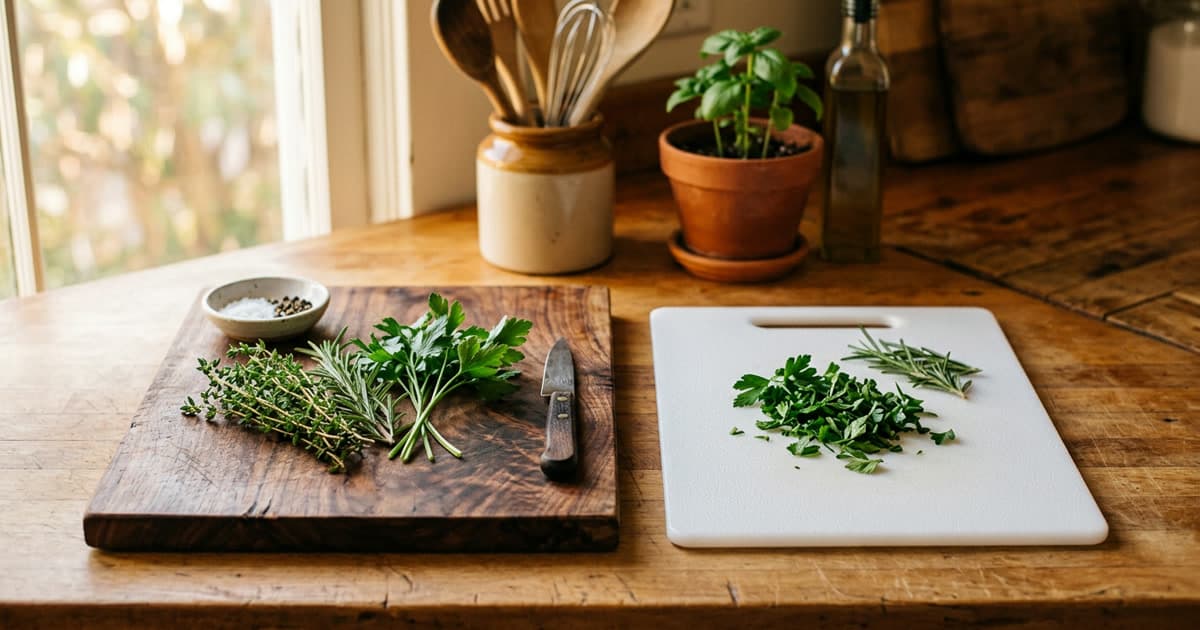
If you have ever shopped for a cutting board, you have probably heard someone say that plastic is more hygienic than wood. It sounds logical on the surface. Plastic is nonporous, easy to bleach, and looks clean. But the science tells a different story, and it strongly favors wood.
At Schmidt Woodcraft, we have been making hardwood cutting boards in our Jacksonville workshop for years. We chose wood not just because it is beautiful, but because research backs up what generations of cooks already knew: wood is the better material for your kitchen.
The UC Davis Study That Changed Everything
In the 1990s, Dr. Dean Cliver at the University of California, Davis set out to prove that plastic cutting boards were safer than wood. He expected the data to confirm what health departments had been recommending for years. Instead, he found the opposite.
When bacteria like Salmonella and E. coli were placed on wooden cutting boards, the bacteria were pulled below the surface by the wood's natural grain structure. Once below the surface, the bacteria could not multiply and eventually died. On plastic boards, bacteria sat on the surface and in knife scars, where they thrived even after washing.
This finding was significant enough to shift the conversation around food safety and cutting board materials. Follow-up studies confirmed the results: hardwoods like maple, walnut, and cherry have natural antibacterial properties that plastic simply cannot match.
Why Wood Fights Bacteria Naturally
Wood's antibacterial behavior comes down to three factors:
- Capillary action. Wood fibers pull moisture (and bacteria) below the surface, where the dry inner environment makes it impossible for bacteria to survive.
- Natural compounds. Hardwoods contain tannins and other organic compounds that inhibit bacterial growth. Walnut, for example, contains juglone, a compound with well-documented antimicrobial properties.
- Self-healing surface. Wood fibers swell slightly when wet, helping to close small knife cuts. Plastic knife scars remain open permanently, creating grooves that harbor bacteria wash after wash.
The Problem with Plastic Over Time
A brand-new plastic cutting board is easy to clean. But after a few months of regular use, the surface becomes scarred with knife marks. These scars create tiny channels where bacteria can hide, and they are nearly impossible to sanitize completely.
Research published in the Journal of Food Protection found that used plastic cutting boards harbored significantly more bacteria than used wooden boards, even after both were cleaned with the same methods. The knife-scarred plastic surface essentially became a breeding ground.
Wood, by contrast, ages gracefully. Small knife marks close up naturally as the wood fibers absorb and release moisture. And with regular oiling using food-safe mineral oil, a hardwood cutting board maintains a smooth, hygienic surface for decades.
What About Dishwashers?
One argument for plastic is that you can throw it in the dishwasher. That is true, and the high heat does kill bacteria effectively. But dishwashers also warp and degrade plastic boards faster, making those knife scars worse over time.
Wooden cutting boards should not go in the dishwasher, but they do not need to. A quick wash with hot water and mild soap is all it takes. For deeper cleaning, a paste of coarse salt and lemon juice works beautifully. The board dries naturally, and the wood's antibacterial properties do the rest.
For more detailed care instructions, check out our complete wood care guide.
Which Woods Are Best?
Not all wood is created equal when it comes to cutting boards. Hardwoods with tight grain patterns perform best:
- Hard maple is the classic choice. It is extremely dense, has a tight grain, and resists knife marks better than almost any other wood.
- Walnut is naturally rich in antimicrobial compounds and is gentler on knife edges than maple. Its dark, warm tones also make it stunning in the kitchen.
- Cherry falls between maple and walnut in hardness. It develops a beautiful patina over time and has excellent antibacterial properties.
We use all three of these woods in our cutting board collection, often combining them in edge grain and end grain patterns that are as functional as they are beautiful.
End Grain: The Gold Standard
If you want the most hygienic and knife-friendly cutting surface, end grain is the way to go. End grain cutting boards expose the ends of the wood fibers, which act almost like a self-healing surface. Your knife edge slides between the fibers rather than cutting across them, which means fewer knife scars and a surface that stays smoother longer.
End grain boards also pull bacteria below the surface more effectively than edge grain or face grain boards, making them the best choice from a food safety perspective.
The Environmental Factor
Beyond hygiene, there is an environmental case for wood. Plastic cutting boards are made from petroleum-based polymers and cannot be recycled in most areas. When they wear out, they end up in landfills where they take hundreds of years to break down.
A well-made wooden cutting board, on the other hand, can last 20 years or more with basic care. When it finally reaches the end of its life, it biodegrades naturally. And the wood itself is a renewable resource, especially when sourced from sustainably managed forests.
Common Myths About Wooden Cutting Boards
"Wood absorbs raw meat juices and becomes contaminated." While wood does absorb surface moisture, the bacteria in that moisture die once they are pulled below the surface. This is the key finding from the UC Davis research.
"You cannot use wood for raw meat." You can. Just wash the board with hot soapy water after use, exactly as you would with any cutting surface. Many professional kitchens use wooden butcher blocks for meat preparation.
"Wooden boards need constant maintenance." A quick wash after each use and a coat of mineral oil once a month is all it takes. That is about 30 seconds of maintenance per month for a board that will last decades.
Making the Switch
If you have been using plastic cutting boards, switching to wood is one of the easiest kitchen upgrades you can make. You get a more hygienic surface, a tool that lasts dramatically longer, and a beautiful piece of craftsmanship that makes cooking more enjoyable.
Every cutting board we make at Schmidt Woodcraft is built by hand in our Jacksonville, FL workshop using premium hardwoods. Whether you are looking for a compact board for everyday prep or a statement piece for entertaining, we have something for you.
Browse our cutting board collection or request a custom board built to your exact specifications.
Looking for the perfect cutting board?
Every board we make is built by hand in our Jacksonville, FL workshop using premium hardwoods. Browse our collection or request a custom piece.