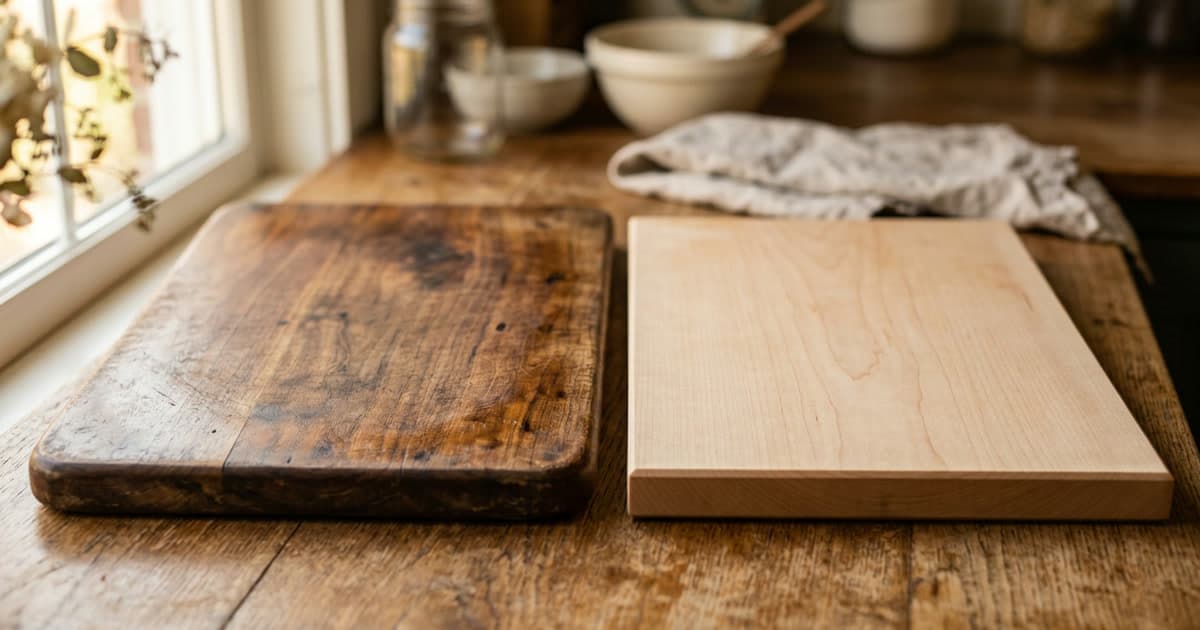
There is a particular kind of pride that comes from owning something that has outlasted everything else in the house. Maybe it is a wooden salad bowl that belonged to your grandmother. Maybe it is a butcher block that has anchored the same kitchen counter for thirty years. These pieces survive not because they were preserved in a glass case, but because they were used every single day and built well enough to handle it.
At Schmidt Woodcraft, building things that last is the entire point of what we do. Every piece that leaves our Jacksonville, FL workshop is designed to be used hard, loved deeply, and passed on. Here is why handmade wood products have that kind of staying power, and what sets them apart from the things that end up in the trash within a few years.
It Starts with the Right Wood
The lifespan of a wooden product is largely decided before the first cut is made. The species of wood, how it was dried, and the quality of the individual board all determine whether a finished piece will last five years or fifty.
We work primarily with hard maple, walnut, and cherry. These are dense, tight-grained hardwoods that have been trusted by craftsmen for centuries. Hard maple is one of the hardest domestic woods available and resists knife marks and dents better than almost anything else. Walnut is naturally rich in oils that give it built-in resistance to moisture and bacteria. Cherry is moderately hard with a grain structure that only becomes more beautiful as it ages.
Mass-produced kitchen items, by contrast, often use softer woods, low-grade bamboo, or pressed composites. These materials are chosen for cost, not longevity. A bamboo cutting board might look fine on the shelf, but after a year of regular use, it begins to splinter, split at the glue joints, and develop deep grooves that trap bacteria. A quality hardwood board is just getting started at the one-year mark.
Craftsmanship That Goes Beyond Assembly
Building a cutting board or kitchen piece that lasts decades requires more than just using good wood. It requires understanding how wood moves. And wood does move. It expands and contracts with changes in humidity and temperature, and if a piece is not designed to accommodate that movement, it will eventually crack or warp no matter how good the material is.
When we build a cutting board, every piece of wood is carefully oriented so that the grain pattern works together rather than against itself. The glue-up uses FDA-approved, waterproof adhesive applied to precisely milled surfaces that fit together tightly. The boards are clamped under controlled pressure and left to cure fully before any further work is done.
These are not flashy steps. You will never see them in the finished product. But they are the difference between a board that holds together under twenty years of daily use and one that starts separating after six months. Mass production cannot afford the time these steps require, which is why factory-made boards are built to a different standard.
The Beauty of Aging Wood
One of the most compelling things about well-made wooden kitchen items is that they actually look better with age. This runs against everything we are used to in a culture of disposable goods, where aging means deterioration and the only fix is replacement.
Wood does not work that way. A walnut cutting board develops a deeper, richer color over months and years of use. Cherry darkens from a light pinkish-brown to a warm, lustrous reddish hue. Maple takes on a honey-gold patina. The fine network of knife marks that develops on a well-used board gives it character and tells the story of hundreds of meals prepared on its surface.
This is the concept of wabi-sabi applied to your kitchen: the idea that beauty comes from use, from age, from the evidence of a life lived. A cutting board with ten years of use looks more interesting and more personal than one fresh out of the box. That quality is unique to natural materials crafted with skill, and it cannot be manufactured or faked.
Proper Care Extends Everything
A handmade wood product is built to last, but it does ask for a small investment of care in return. The good news is that this investment is genuinely tiny. We are talking about thirty seconds of cleaning after each use and a few minutes of oiling once a month.
Regular oiling with food-grade mineral oil keeps the wood fibers nourished and creates a protective barrier against moisture. It prevents drying, cracking, and warping, which are the main ways that wooden kitchen items deteriorate over time. A board that is oiled regularly at twenty years old can look and perform nearly as well as it did on day one.
Neglect, on the other hand, accelerates aging dramatically. A board that is never oiled will dry out, develop surface cracks, and eventually warp or split. But even neglected boards can often be brought back to life with some attention. A thorough sanding and re-oiling can restore a board that has been sitting in a cabinet for years. For step-by-step guidance on maintenance, our wood care guide covers everything you need.
The Math of Buying Once
There is a simple economic argument for investing in quality that gets overlooked because the upfront number feels large. Consider a typical kitchen cutting board from a big-box store. It costs around fifteen to twenty-five dollars and lasts, on average, one to three years before it warps, cracks, or becomes unsanitary from deep knife scars.
Over twenty years, that is anywhere from seven to twenty replacement boards. At the low end, you have spent roughly one hundred and five dollars. At the high end, closer to five hundred, especially if you gradually buy slightly better boards each time. And every one of those boards eventually ends up in the trash.
A single handmade hardwood cutting board costs more upfront but lasts the entire twenty years and beyond with basic care. The total cost of ownership is lower, and at the end of those twenty years, you still have a beautiful, functional board that you can keep using or pass along to someone else. The math is not complicated. Buying quality is the more affordable choice over time.
Heirloom Pieces: More Than Just Kitchen Tools
We hear from customers who received wooden kitchen pieces as wedding gifts and are still using them years later. We hear from people who inherited a wooden bowl or board from a parent or grandparent and treasure it not just for its function but for its connection to someone they love.
That is the real power of a well-made wooden item. It transcends its function. A cutting board is a cutting board, yes. But a cutting board that your mother used to prep Thanksgiving dinner every year for two decades carries a weight that no new purchase can replicate. It becomes part of the family story.
This is not sentimentality for its own sake. It is a practical outcome of building things well. When a product lasts long enough, it accumulates meaning. It stops being an object and starts being an artifact of the life you have lived. That only happens with things built to endure.
Why Mass Production Cannot Replicate This
Factory manufacturing is optimized for speed and cost. That is not a criticism; it is a structural reality. Factories need to produce thousands of units per day to stay profitable, and that pace does not allow for the kind of attention that creates lasting products.
A factory cannot let glue joints cure for a full day. It cannot hand-select each piece of wood for grain orientation. It cannot sand through multiple grits by feel, checking the surface for imperfections at every stage. It cannot apply and cure multiple coats of oil finish. These steps are what create a product that lasts generations, and they require the kind of time and attention that only a small workshop can provide.
This is not about being anti-technology or anti-progress. We use modern tools in our shop, and we appreciate them. But the decisions that determine whether a piece lasts five years or fifty are made by a craftsman, not a machine. That human judgment is irreplaceable, and it is what you are investing in when you choose handmade.
Sustainability Through Longevity
In a time when sustainability matters more than ever, the most environmentally responsible thing you can do is buy less and buy better. A cutting board that lasts twenty years consumes one set of raw materials, creates one set of manufacturing emissions, and generates zero waste during its useful life. Ten replacement boards over the same period consume ten times the resources and create ten times the waste.
The wood we use comes from sustainably managed sources. When a hardwood tree is harvested and turned into a product that lasts decades, the carbon stored in that wood stays locked up for the lifetime of the piece. Compare that to a disposable product that ends up in a landfill within a couple of years.
Choosing handmade is not just a lifestyle preference. It is a practical way to reduce your household's environmental footprint, one purchase at a time.
Built to Be Kept
Every piece we make at Schmidt Woodcraft is built with the same goal: to be worth keeping. Not just this year, not just this decade, but for as long as you want it in your kitchen and your life. That means choosing the right wood, taking the time to build it properly, and finishing it with care so that it arrives ready to serve you for decades.
If you are ready to invest in kitchen pieces that are truly built to last, explore our collection of handcrafted cutting boards, serving trays, and more. Or if you have something specific in mind, reach out about a custom order and we will build it for you.
Looking for the perfect cutting board?
Every board we make is built by hand in our Jacksonville, FL workshop using premium hardwoods. Browse our collection or request a custom piece.